
On this page
    Add a header to begin generating the table of contents

    KP Program 2027

    The focus of this year’s program is a wish to make its content items easy and manageable for both presenters and participants to quickly and intuitively get the essence of.

    We aim to experiment with ways to communicate the angle, presentation and intention of content items to the participants of Knudepunkt through three descriptors:

    • Area – the thematic track of the program item.
    • Format – the way the program item will be presented.
    • Parameters – the degree of complexity and interaction in the program item.

    For a more in-depth walkthrough of the descriptors, see the “call for programs” form or read it further down the page.

    Call for program

    We wish for Knudepunkt 2027 to have a program filled with interesting content items and need your help getting there.

    What is a content item?

    At KP/SK the everyday schedule and program is mostly made up of content items contributed from the participants at KP. There are a ton of different content items ranging from everything in-between:

    • Get-togethers
    • Presentations
    • Larps
    • Room parties
    • Workshops

    If you wish to host a content item please click the button below and fill out the form.

    Be aware that you have to have bought a ticket for KP before you can pitch content. Buy your ticket here

    kopia av kp2026 037 (2)
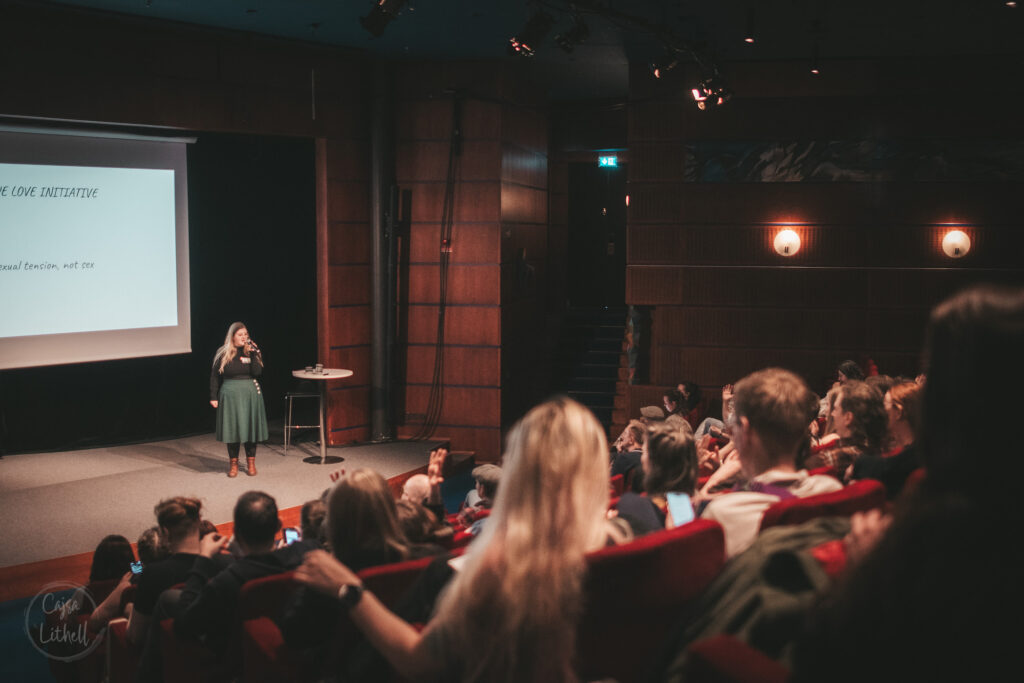
    Photo by: Cajsa Lithell

    What is a good program item description?

    The description of your program item is the first thing participants learn about your item. It should both capture their interest and clarify both what you want to achieve with the item, and what you expect from your participants. Alongside the area, format and parameters, it gives a full picture of what your program item really is.

    A good program description for the website should:

    • Have an interesting hook
    • Explain what the program item is about
    • Make it clear what participants can expect

    The following is an example of what a full program item on the website could look like:

    Example: New at KP speeddating

    • Area – Recreational
    • Format – Miscellaneous
    • Parameters – Complexity: 2, Interaction: 5

    Description

    The first time attending KP can seem overwhelming and scary. “New at KP speeddating” is the perfect way to disarm the fear and start KP off on a social note.

    The item is about quickly getting to know some new faces at KP. During the item, we will go through several rounds of facilitated conversations, all to learn the names and stories of your fellow participants, making it easier to connect later during KP.

    You can expect short conversations, laughs, interesting topics, and new connections.

    Program item descriptors in detail

    Areas

    Areas cover the thematic track of a content item. Their goal is to make it easy to intuitively understand the essence of an item and what kind of experience and angle participants can expect. Every area will be presented with examples in the following. 

    Lastly, an example of the topic “inclusion” will be presented as a content item under each area to highlight their different angles on a similar topic.

    Recreational

    • Socializing, networking, room parties and hangouts.

    Recreational is about the people of our ship; hanging out together, getting to know each other, playing, partying, crafting, and socializing.

    Examples:

    • Sing Along – Guardians Of The Galaxy.
    • Sleepy “Walk’n’talk”
    • “Dopamine Danceparty”
    • Genderless roomparty

    Operation

    • Practical, preparation, communication, and logistics.

    Operation is about what makes your project fly: economy, teamwork, acquiring locations, the how-to, and the practical details.

    Examples:

    • “Money-up!” – A guide to getting your project funding
    • How to foster a healthy volunteer environment
    • “The Tetris of Vans” – a workshop in packing
    • Toolbox-sharing: How do we do budgets, logistics, and communication?

    Engineering

    • Design, mechanics, steering and storytelling.

    Engineering is about how we design our spacecraft; safety, worldbuilding, fostering and calibrating meaningful interactions. 

    Examples:

    • Calibrating the ultimate scene
    • Hacking for Utopia – how we made a LARP about hope
    • The range of intimacy mechanics
    • “Bullying my friends” – a workshop about being an active and caring protagonist

    Navigation

    • History, future, visions and dreams.

    Navigation is about the destinations of Nordic Larp; ideologies, politics, how it affects and is affected by the world surrounding our community.

    Examples:

    • The History of Nordic Larp
    • How Nordic Larp should change the world 
    • “KP in 10 years?” And how do we get there?”
    • “The Mistakes I Made” – lessons learned

    Research

    • Academia, research, funding and new concepts –

    Research is all about the new frontiers of academic findings, aspiring ideas, and projects within the field of Nordic Larp.

    Examples:

    • Present your new article, book, or thesis about LARP
    • “Should we research together?” – come and meet new collaborators
    • “Erasmus-adventure” – How to get EU-funding 101
    • “Academic nerdout”: What are the hottest research concepts right now?

    Examples of the subject “inclusion” in every Area:

    • Recreational – Silent disco
    • Navigation – When and how to exclude in order to include?
    • Operation – How to build a safety room that actually works
    • Engineering – When characters are good at something the players are bad at
    • Research – Present your article about inclusion and gender norms within Nordic Larp

    Formats

    Formats represent the way the content item will be facilitated in practice.

    presentation icon

    Presentation

    The host presents a topic during the majority of the item. There may be room for questions and short additions from the participants.

    panel icon

    Panel

    The host presents a topic, question, or something similar, and a panel of pre-chosen participants will discuss it in depth.

    conversation icon

    Conversation

    The host presents a topic, question, or something similar. The participants will converse and discuss with the host and each other. 

    workshop icon

    Workshop

    The host facilitates a workshop where participants can be active and engaged in co-creating a product, problem-solving, or otherwise learning interactively.

    larp icon

    Larp

    The host organizes a larp for one or more participants.

    room party icon

    Room party

    A party or get-together in a designated room. These parties are typically themed.

    miscellaneous icon

    Miscellaneous

    Miscellaneous are the program items that don't fit in the other formats.

    Parameters

    Every content item will be rated on the parameters of complexity and interaction on a scale of 1 to 5.

    • Complexity: How difficult or easy is it to understand or engage with the item in a meaningful way?
    • Interaction: To what degree are the participants expected to actively engage with the item?

    Complexity 1

    Anyone at KP could understand and take part in this content item without any prior knowledge or training.

    Examples:

    • A workshop that starts with the basics of how to learn Riverdance
    • A thesis presented exclusively in layman’s terms 

    Complexity 5

    You need a substantial prior understanding or training to get the full benefit of the content item.

    Examples:

    • A Riverdance Workshop where you will bring your own shoes and have received training for at least a year.
    • A thesis will be discussed with the assumption of the audience having read it beforehand.

    Interaction 1

    You get the full experience of the content item with little to no interaction with the presenter or other participants.

    Examples:

    • Listening to a presentation or panel
    • Working alone at your own pace in a miscellaneous activity

    Interaction 5

    You need to interact with the content item, the presenter, and other participants for the majority of the time, and it is necessary to get the benefits of the content item.

    Examples:

    • A “get to know eachother” miscellaneous activity
    • Hand to hand combat workshop
    Scroll to Top